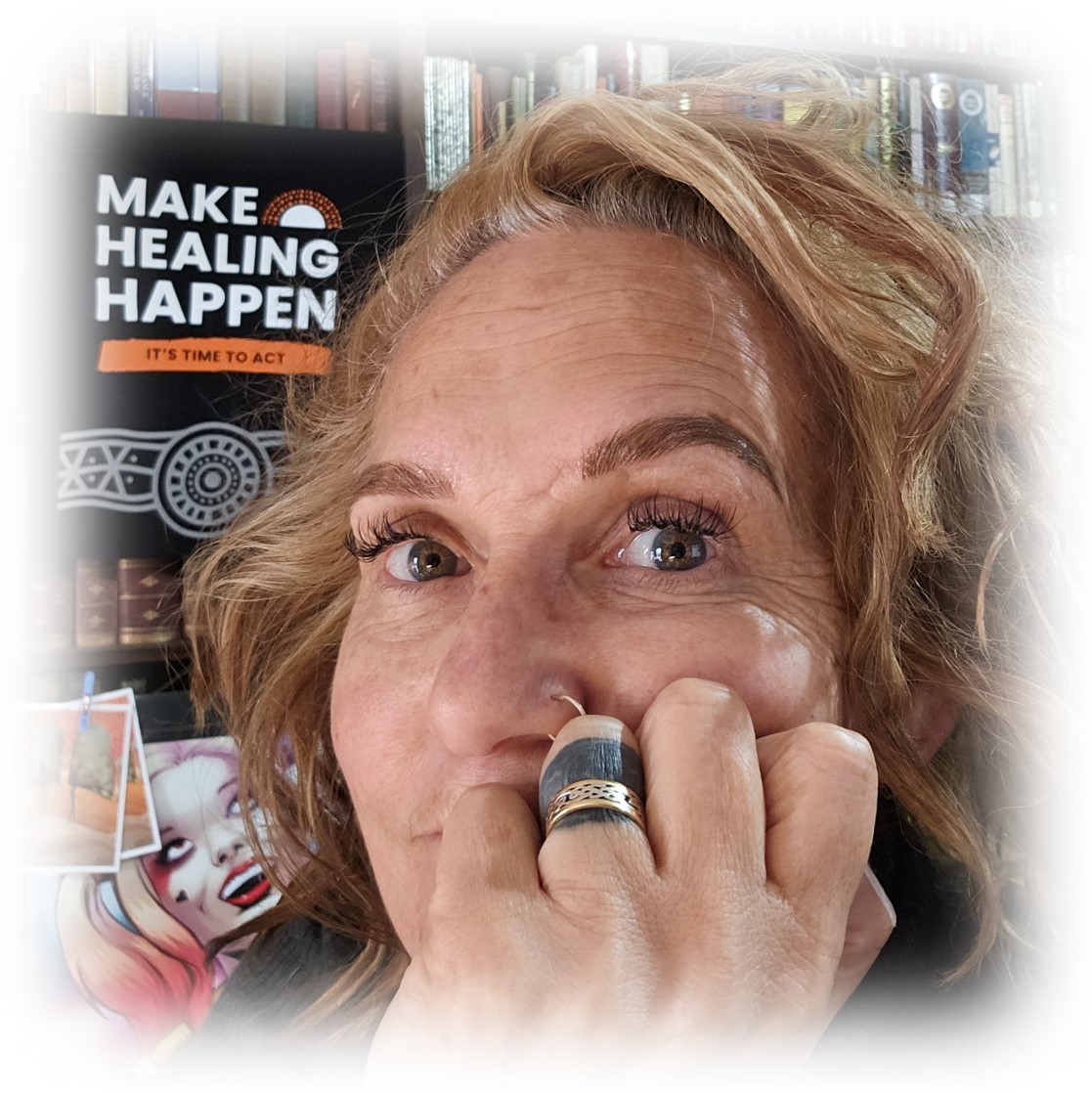
who is Jed
here’s the least important stuff first. I have degrees in Adult Training and Development, Career Education, Narrative Therapy and am currently undertaking PHD research at Charles Darwin University. I am registered level four with the Australian Counselling Association, and the business is registered with Support Nation and IAHA. I have been employed in construction, community services and the public service. In my younger days, I worked behind the counter in the Commonwealth Employment Service, and in administration in Austudy, Abstudy and SQWISI. Prior to starting Hobajing Practice, most of my exposure was in construction quality management and safety coaching, with side hustles in team building and problem solving.
those qualifications and experiences though are minimal compared to the skills, strengths and knowledges I gained from the limitations society tried to force upon me, from being born into an Aboriginal family wanting an old life and tarnished as trash, and a family of Scottish immigrants wanting a new life and tarnished as trash. I was the first born and from there my sisters grew and grew and grew and grew and grew and grew. I have no brothers. Constantly judged either from the “partAbo*” view or the “just a girl” view, It many detours to become the woman I am today and as such, I am very comfortable talking and listening and exploring cultural, age and gender safety and identity, homelessness, child abandonment, sex work, redundancy, divorce, addiction, alcoholism, blended families and any other meta narratives that overshadow a Client’s love, life or work
my approach combines my knowledges and lived experiences with the healing ways of my Yuwaalaraay, Muruwari and Scottish ancestors. They may do it differently within in each culture, but they all embrace the notions of community and yarning, and view health as a combination of parts intertwined with each other. So far I have around 2000 hours of first hand yarning, counselling and supervision experience based on this approach
* while there are many words that today are recognised as offensive, i believe it is important for people to use terms that are familiar and strong to them, when revisiting their own story. The term “partAbo” has a specific meaning to my childhood and it is that meaning that reduced services, attitudes and the availability of desperately needed help when I was growing up, so in stories of my upbringing, it is the only word that fits